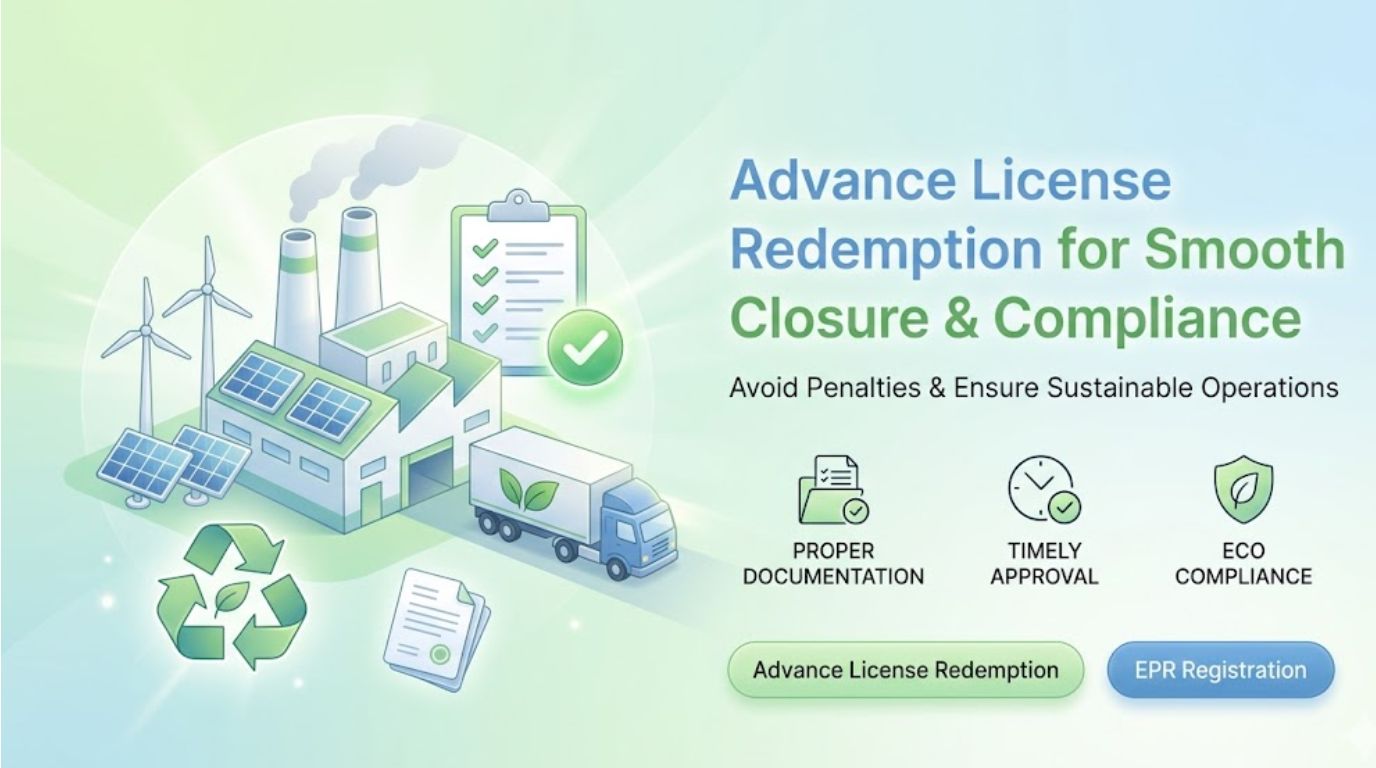
In today’s regulatory-driven business environment, companies engaged in manufacturing and international trade must focus not only on profitability but also on compliance and sustainability. Two important processes that help businesses achieve these goals are Advance License Redemption and EPR Registration. While advance license redemption ensures proper closure of duty-free import obligations, EPR registration focuses on environmental responsibility and waste management.
Understanding how these two frameworks work—and how they contribute to long-term business success—can help organizations operate more efficiently, avoid penalties, and build a strong reputation in both domestic and global markets.
What is Advance License and Why Redemption is Important
The Advance Authorization Scheme allows businesses to import raw materials without paying customs duty, provided they fulfill export obligations within a specified time. However, completing exports alone is not sufficient. Businesses must complete Advance License Redemption to officially close the authorization.
Importance of Advance License Redemption
- It acts as formal proof that the business has successfully fulfilled its export obligations, ensuring compliance with foreign trade policies and preventing future legal complications.
- Proper redemption protects companies from penalties, including duty recovery along with interest, which may arise if obligations are not formally discharged.
- It helps maintain a clean compliance record, which is essential for availing other government schemes and certifications in the future.
- Timely completion of the redemption process builds credibility with authorities and reflects strong internal compliance practices within the organization.
Key Steps in Advance License Redemption
- Collect and organize all export-related documents, including shipping bills, invoices, and bank realization certificates, to demonstrate fulfillment of obligations.
- Obtain a certificate from a chartered accountant or relevant professional confirming that export targets have been met as per license conditions.
- Submit the redemption application to the concerned authority along with supporting documentation for verification and approval.
- Address any queries or discrepancies raised during the review process to ensure smooth and timely closure of the license.
Practical Example
A chemical manufacturer imports raw materials duty-free under an advance authorization. After exporting finished goods within the stipulated period, the company completes Advance License Redemption. This ensures there are no pending liabilities and allows the business to continue operations without compliance risks.
Understanding EPR Registration
EPR Registration (Extended Producer Responsibility) is an environmental compliance requirement that mandates producers, importers, and brand owners to manage the disposal and recycling of waste generated from their products, particularly plastic, e-waste, and packaging materials.
This regulation is becoming increasingly important as governments focus on sustainability and environmental protection.
Benefits of EPR Registration
- It ensures that businesses take responsibility for the lifecycle of their products, including waste management, which helps reduce environmental impact and supports sustainable practices.
- Companies enhance their brand image and credibility by demonstrating a commitment to environmental responsibility, which is increasingly valued by consumers and stakeholders.
- EPR compliance helps avoid penalties and legal issues that may arise from non-compliance with environmental regulations.
- Businesses gain access to structured recycling systems and partnerships, enabling efficient waste collection and processing.
- It supports long-term sustainability goals, helping organizations align with global environmental standards and corporate social responsibility initiatives.
How Advance License Redemption and EPR Registration Work Together
Although Advance License Redemption and EPR Registration serve different purposes, they collectively strengthen a company’s compliance framework and operational efficiency.
Combined Advantages
- Businesses that complete advance license redemption demonstrate strong regulatory compliance, while EPR registration showcases environmental responsibility, creating a balanced and responsible business profile.
- The combination improves credibility with both regulatory authorities and customers, as the company is seen as compliant in trade as well as sustainability practices.
- Efficient documentation and internal controls developed for redemption processes can also support EPR compliance, making it easier to manage reporting and audits.
- Companies can reduce risks and avoid penalties across multiple regulatory domains by aligning trade and environmental compliance strategies.
Step-by-Step Approach for Businesses
For Advance License Redemption
- Review the terms and conditions of the license to ensure that all export obligations have been fulfilled within the specified timeframe.
- Organize all necessary documentation in a systematic manner, ensuring there are no gaps or inconsistencies that could delay the process.
- Submit the redemption application along with verification certificates and respond promptly to any queries raised by authorities.
- Obtain the redemption certificate, confirming that the license has been successfully closed without any pending liabilities.
For EPR Registration
- Identify whether your business falls under EPR regulations based on the type of products or packaging materials used.
- Prepare required documentation, including details of products, waste generation, and proposed recycling mechanisms.
- Register with the appropriate authority and develop a plan for waste collection, recycling, or disposal in compliance with regulations.
- Maintain records and submit periodic reports to demonstrate ongoing compliance with EPR requirements.
Best Practices for Smooth Compliance
- Maintain accurate and transparent records of imports, exports, and waste management activities so that both advance license redemption and EPR registration processes can be completed efficiently.
- Invest in technology and systems that enable tracking and monitoring of materials, ensuring data is easily accessible during audits or inspections.
- Train employees on compliance requirements and environmental responsibilities so that all departments contribute to maintaining standards.
- Conduct regular internal audits to identify potential gaps and address them proactively before they lead to delays or penalties.
Common Challenges and How to Overcome Them
- Incomplete documentation can delay Advance License Redemption, so businesses should focus on maintaining organized and detailed records from the beginning.
- Lack of awareness about environmental regulations may hinder EPR compliance, which can be addressed through proper training and expert consultation.
- Delays in communication with authorities can slow down both processes, making it important to respond promptly and maintain proactive engagement.
Why These Processes Matter for Long-Term Growth
In today’s business environment, compliance is not just a requirement but a strategic advantage. Advance License Redemption ensures that businesses avoid financial liabilities and maintain a clean record, while EPR Registration strengthens sustainability practices and enhances brand value.
Companies that effectively manage both can improve operational efficiency, reduce risks, and build stronger relationships with customers and stakeholders. This combination creates a solid foundation for sustainable and compliant growth.
Conclusion
Advance License Redemption and EPR Registration are essential for businesses looking to succeed in a competitive and regulated environment. While one ensures compliance with export obligations, the other demonstrates commitment to environmental responsibility.
If you want to streamline your operations, avoid penalties, and build a strong reputation in the market, now is the time to act. Complete your advance license redemption on time and take proactive steps toward EPR compliance.
Start today and position your business for efficient, responsible, and future-ready growth.