
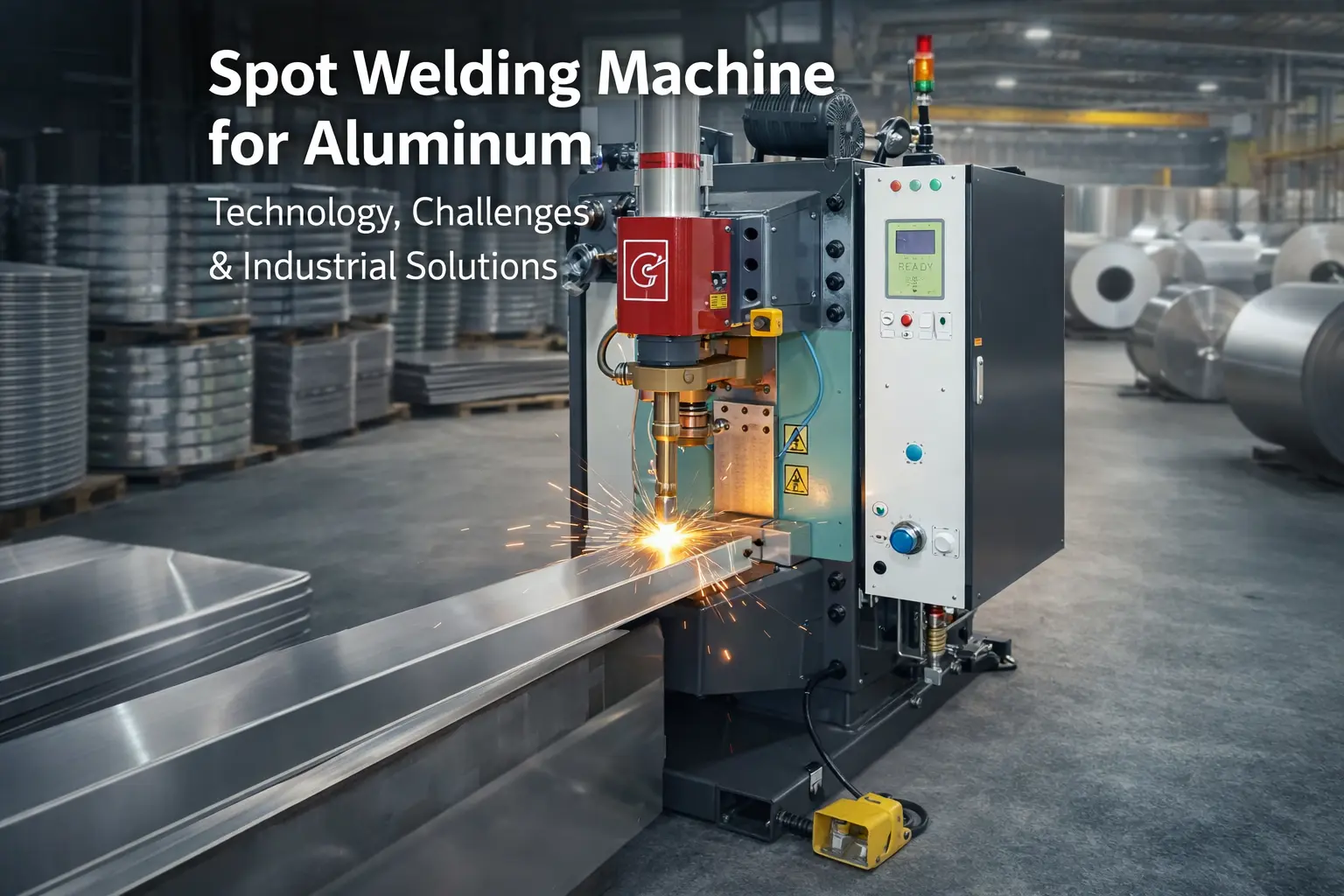
Aluminium has become one of the most important materials in modern manufacturing due to its lightweight structure, corrosion resistance, and high strength-to-weight ratio. However, joining aluminium efficiently and reliably remains a technical challenge for many production environments. Among various joining techniques, spot weld aluminium using resistance welding technology has emerged as a widely adopted solution in automotive, aerospace, battery, and appliance industries.
For manufacturing engineers, OEMs, and automation integrators, understanding how aluminium behaves during spot welding is essential to achieving consistent weld quality, productivity, and long-term production stability. This article explains the principles, challenges, applications, and best practices of aluminium spot welding, along with advanced industrial solutions provided by Heron Welder.
What is Spot Welding Aluminium?
Spot welding aluminium is a resistance welding process that joins two or more aluminium sheets by applying controlled pressure and high electrical current through copper electrodes. The heat generated at the interface melts the metal locally, forming a weld nugget after solidification.
Unlike steel, aluminium presents unique physical properties that make the process more complex:
- High electrical conductivity
- High thermal conductivity
- Rapid heat dissipation
- Strong oxide layer on the surface
These characteristics require significantly higher current levels and precise process control compared to conventional steel spot welding.
In industrial production, successful aluminium spot welding depends heavily on equipment capability, electrode design, and intelligent welding control systems.
How Spot Welding Aluminium Works
The aluminium spot welding process follows the basic resistance welding principle but with tighter process control requirements.
1. Electrode Contact and Clamping Force
Copper alloy electrodes apply mechanical pressure on aluminium sheets to ensure proper contact and reduce interface resistance variability.
2. High Current Flow
A high-amperage current passes through the workpieces. Due to aluminium’s conductivity, much higher current levels are required compared to steel welding.
3. Heat Generation at Interface
Heat is generated based on electrical resistance at the contact point. The aluminium surface melts locally, forming a molten nugget.
4. Weld Nugget Formation
After the current stops, the molten metal solidifies under pressure, creating a strong metallurgical bond.
5. Cooling and Solidification
Controlled cooling ensures structural integrity and reduces defects such as porosity or cracking.
Modern systems often use MFDC (Medium Frequency Direct Current) technology to improve energy efficiency, control heat input, and enhance weld consistency in aluminium applications.
Key Challenges in Spot Welding Aluminium
Aluminium spot welding is significantly more complex than steel due to several technical barriers:
1. Oxide Layer Formation
Aluminium naturally forms a hard oxide layer (Al₂O₃) that increases electrical resistance inconsistently, affecting weld quality.
2. Electrode Wear
High current levels accelerate electrode degradation, leading to unstable weld quality and increased maintenance costs.
3. Heat Dissipation
Aluminium dissipates heat rapidly, making it difficult to maintain sufficient welding temperature for nugget formation.
4. Expulsion and Spatter
Improper parameter control can cause molten metal expulsion, weakening the weld and damaging surfaces.
5. Porosity and Weak Weld Nuggets
Trapped gases during solidification can result in internal voids and reduced joint strength.
Addressing these challenges requires advanced process control systems and optimized welding parameters.
Best Practices for High-Quality Aluminium Spot Welding
To achieve reliable and repeatable results in spot weld aluminium applications, manufacturers must adopt optimized techniques and advanced equipment strategies.
1. Surface Preparation
Proper cleaning of aluminium surfaces is critical. Removing oxide layers through mechanical or chemical cleaning improves conductivity and weld consistency.
2. Optimized Electrode Design
Use copper-chromium or copper-zirconium electrodes with proper tip geometry to improve current density and reduce wear.
3. High Precision Welding Control
Advanced MFDC controllers allow fine adjustment of current waveform, welding time, and pressure for stable energy delivery.
4. Multi-Pulse Welding Techniques
Pre-heating pulses followed by main welding pulses help break oxide layers and improve nugget formation.
5. Adequate Clamping Force
Higher and more stable electrode force ensures proper contact and reduces expulsion risks.
6. Regular Electrode Maintenance
Frequent dressing and replacement cycles help maintain weld consistency in high-volume production lines.
Industrial Applications of Aluminium Spot Welding
Spot welding aluminium is widely used in industries where lightweight strength and mass production efficiency are essential.
Automotive Manufacturing
- Body-in-white assemblies
- EV lightweight structures
- Door panels and chassis components
Electric Vehicle Battery Production
- Battery enclosures
- Busbar connections
- Aluminium cell packaging systems
Aerospace Industry
- Aircraft fuselage panels
- Lightweight structural assemblies
- Interior components
Home Appliances
- Refrigerators
- Air conditioning units
- Aluminium housing assemblies
Industrial Equipment
- Electrical enclosures
- Machine covers
- Lightweight support structures
The increasing demand for lightweight materials in transportation and energy sectors continues to expand aluminium spot welding applications globally.
Aluminium Spot Welding vs Steel Resistance Welding
Understanding the differences between aluminium and steel spot welding is crucial for process engineers.
| Parameter | Aluminium Spot Welding | Steel Spot Welding |
|---|---|---|
| Electrical Conductivity | High | Low |
| Required Current | Very High | Moderate |
| Electrode Wear | High | Low |
| Heat Retention | Low | High |
| Process Sensitivity | Very High | Moderate |
| Surface Oxide Impact | Significant | Minimal |
Aluminium requires more precise control, advanced power systems, and higher maintenance standards compared to steel welding.
Heron Welder Solutions for Aluminium Spot Welding
Heron Welder provides advanced resistance welding and automation solutions designed specifically for challenging materials like aluminium.
MFDC Spot Welding Systems
High-efficiency medium frequency DC systems ensure stable current output, improved energy control, and reduced heat loss—ideal for aluminium applications.
Capacitor Discharge Welding Machines
Perfect for thin aluminium sheets and precision components where controlled energy release is critical.
Automated Welding Production Lines
Integrated automation systems enable high-speed, repeatable aluminium joining for large-scale manufacturing environments.
Welding Guns and Custom Fixtures
Engineered for durability and precision, ensuring consistent electrode force and alignment in continuous production cycles.
Intelligent Welding Controllers
Advanced control systems provide real-time monitoring of current, voltage, and force, enabling predictive maintenance and process optimization.
With decades of expertise in resistance welding technology, Heron supports OEMs and manufacturers in achieving stable aluminium spot welding performance across diverse industrial applications.
FAQs: Spot Weld Aluminium
1. Can aluminium be spot welded effectively?
Yes, aluminium can be spot welded effectively using high-current resistance welding systems with proper surface preparation and advanced control technology.
2. Why is aluminium harder to spot weld than steel?
Aluminium has high conductivity, rapid heat dissipation, and an oxide layer that makes stable weld formation more challenging.
3. What is the best welding method for aluminium sheets?
Resistance spot welding with MFDC technology is widely used in industrial applications, especially for high-volume production.
4. How can electrode wear be reduced in aluminium welding?
Using high-quality electrode materials, proper cooling systems, and optimized welding parameters can significantly reduce wear.
5. Is spot welding aluminium suitable for EV battery production?
Yes, it is commonly used in EV battery manufacturing for busbars, enclosures, and lightweight structural connections.
Summary
Spot welding aluminium is a highly specialized process that demands precision equipment, advanced control systems, and optimized parameters to achieve consistent industrial results. While aluminium presents challenges such as oxide formation, high conductivity, and electrode wear, modern resistance welding technologies have made it a reliable solution for large-scale manufacturing.
Heron Welder continues to support global manufacturers with high-performance spot welding systems, automation solutions, and intelligent controllers designed specifically for aluminium and other demanding materials.
Looking to improve your aluminium welding process?
Contact Heron Welder to request a customized consultation or quotation and discover how advanced resistance welding solutions can enhance your production efficiency, quality, and competitiveness.