
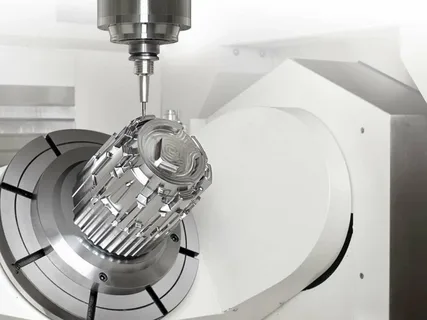
In modern product development, accuracy is one of the most important factors in turning an idea into a successful product. Even the most innovative concepts can fail if dimensions are inconsistent or parts do not fit together correctly. This is where rapid prototyping CNC machining plays a crucial role. By using computer-controlled cutting tools to create precise prototypes, manufacturers can test, refine, and perfect designs before committing to full-scale production.
Unlike traditional prototyping methods, rapid prototyping CNC machining produces highly detailed and dimensionally accurate parts from real production materials. Engineers and designers can validate every aspect of a product, from fit and function to strength and appearance. This article explores how rapid prototyping CNC machining improves design accuracy and helps businesses reduce costly errors.
Precise Manufacturing with Digital Control
Rapid prototyping CNC machining relies on advanced computer numerical control systems that translate CAD designs directly into physical parts. Every cut is programmed according to exact specifications, ensuring that the finished prototype matches the digital model with exceptional precision.
This automated process eliminates many of the inaccuracies associated with manual machining and hand-built prototypes. As a result, engineers can confidently assess whether their designs meet all dimensional and performance requirements.
Key Benefits of Digital Precision
- Tolerances as tight as ±0.001 inches
- Consistent repeatability across multiple prototypes
- Elimination of manual measurement errors
- Accurate translation from CAD to physical part
By maintaining exact dimensions, rapid prototyping CNC machining provides a reliable foundation for testing and validation.
Real-World Material Testing for Better Accuracy
One of the biggest advantages of rapid prototyping CNC machining is the ability to create parts from actual engineering materials such as aluminum, stainless steel, ABS, and polycarbonate. This gives designers a realistic understanding of how the product will perform under real conditions.
Using production-grade materials helps identify design issues that may not be visible in lower-quality mockups. For example, thermal expansion, material flex, and structural strength can all be evaluated accurately.
Common Prototype Materials
- Aluminum for lightweight and durable parts
- Stainless steel for strength and corrosion resistance
- ABS plastic for functional testing
- Delrin for low-friction components
When prototypes behave like final products, design decisions become far more precise and dependable.
Improved Fit and Assembly Validation
Design accuracy is not limited to individual components. Products often consist of multiple parts that must fit together perfectly. Rapid prototyping CNC machining enables manufacturers to produce highly accurate parts that can be assembled and tested before mass production.
This process reveals issues such as misaligned holes, improper clearances, and tolerance stack-ups. Engineers can make adjustments early, preventing assembly problems that would otherwise lead to delays and expensive redesigns.
Assembly Issues Identified Early
- Parts that do not align correctly
- Fasteners that fail to fit
- Moving components that bind
- Gaps between mating surfaces
By validating fit and function, rapid prototyping CNC machining ensures the final product performs exactly as intended.
Faster Design Iterations with Consistent Results
Product development often involves multiple design revisions. Rapid prototyping CNC machining allows teams to produce updated prototypes quickly, sometimes within days. Because each prototype is made using the same digital process, comparisons between iterations are accurate and meaningful.
This consistency makes it easier to measure improvements and confirm that design modifications achieve the desired results. Engineers can focus on refining performance rather than questioning manufacturing variability.
Advantages of Rapid Iteration
- Quick turnaround for design changes
- Reliable comparison between versions
- Reduced development time
- Faster path to optimized designs
With rapid prototyping CNC machining, teams can move from concept to perfected design more efficiently.
Enhanced Surface Quality and Dimensional Stability
Surface finish and dimensional stability are essential for evaluating both functionality and aesthetics. Rapid prototyping CNC machining produces smooth surfaces and sharp details that closely resemble production-quality parts.
The machining process also minimizes distortion, particularly when compared to some additive manufacturing methods. This allows for more accurate testing of seals, mating surfaces, and cosmetic features.
Surface and Stability Benefits
- Smooth and professional finishes
- Accurate threads and holes
- Sharp corners and fine details
- Minimal warping or shrinkage
These qualities help designers assess products with greater confidence and make informed improvements.
Reduced Risk of Production Errors
Discovering design flaws after production begins can lead to wasted materials, tooling changes, and delayed product launches. Rapid prototyping CNC machining significantly reduces this risk by verifying dimensions, tolerances, and performance before manufacturing starts.
This proactive approach allows teams to correct issues while changes are still inexpensive. The result is a more accurate final design and a smoother transition to mass production.
Production Risk Reduction
- Prevents tooling modifications
- Minimizes material waste
- Avoids costly recalls
- Improves manufacturing readiness
By confirming every detail early, rapid prototyping CNC machining saves time and protects budgets.
Better Communication Between Teams
Accurate prototypes are valuable communication tools for engineers, designers, manufacturers, and clients. Instead of relying solely on digital renderings, stakeholders can inspect and test a tangible part that reflects the actual design.
This hands-on evaluation leads to more productive discussions and clearer feedback. Teams can identify potential improvements and approve designs with greater certainty.
Collaboration Benefits
- Easier design reviews
- More precise stakeholder feedback
- Improved supplier communication
- Stronger confidence in final decisions
Rapid prototyping CNC machining bridges the gap between concept and reality, ensuring everyone works from the same accurate reference.
Conclusion
Rapid prototyping CNC machining is a powerful solution for improving design accuracy throughout the product development process. By producing precise prototypes from real materials, it allows engineers to validate dimensions, test assemblies, refine functionality, and eliminate errors before production begins.
From tighter tolerances and superior surface finishes to faster design iterations and reduced manufacturing risks, rapid prototyping CNC machining provides the accuracy needed to create reliable, high-quality products. Companies that invest in this technology can accelerate innovation, lower costs, and bring better products to market with confidence.