
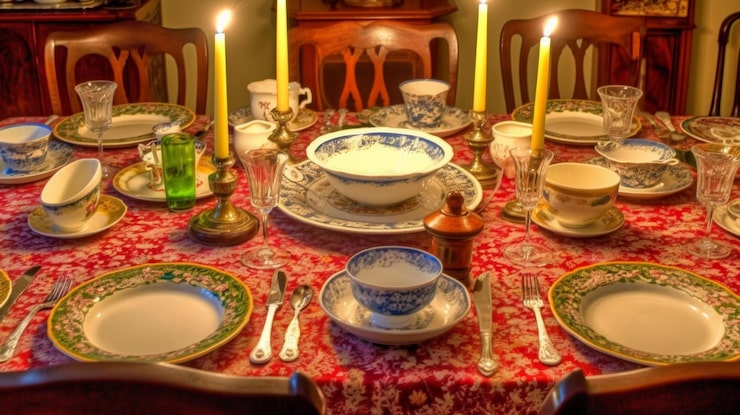
The dinner set price in Pakistan has become a critical exercise in understanding consumer purchasing power and industrial overheads. As the peak summer wedding season of 2026 approaches, the market is witnessing a surge in inventory turnover, influenced by localized production efficiencies and a stabilized exchange rate. Historically, the tableware business in Pakistan relied heavily on imported porcelain, but the 2026 fiscal year shows a massive incline toward high-quality domestic “A-Grade” stoneware and reinforced melamine. This report provides a comprehensive economic evaluation of current retail benchmarks, brand competition, and the logistical frameworks defining the Pakistani dinnerware trade.
1. Industrial Drivers and Wholesale Pricing Structures
The commercial valuation of a dinner set in the Pakistani market is dictated by a complex interplay of industrial energy costs and raw material availability. In May 2026, the primary driver for the dinner set price in Pakistan is the cost of liquefied natural gas (LNG) used in high-capacity ceramic kilns. Manufacturers in the Gujranwala and Gujrat industrial clusters have integrated advanced heat-recovery systems to lower production costs. This industrial innovation has allowed local brands to maintain competitive pricing despite global inflationary pressures. Furthermore, the “Value-Added Tax” (VAT) structures for 2026 have been streamlined for the cottage industry, providing a much-needed buffer for small-scale artisanal ceramic producers. The stability of the Pakistani Rupee in early 2026 has also allowed for more predictable pricing in the porcelain segment, which still requires some imported chemical glazes.
2. Retail Segmentation: 2026 Commercial Benchmarks
To conduct a professional market assessment, it is necessary to segment the dinnerware industry into material-based tiers. The following data represents the verified market averages for May 2026 across major retail hubs like Lahore, Karachi, and Islamabad.
Melamine Retail Sector (Mass Market Volume) Melamine remains the backbone of the domestic retail trade due to its high durability and low replacement frequency. In May 2026, premium double-glazed sets have seen a 12% increase in demand compared to the previous quarter.
- 18-Piece Basic Starter Series: Rs. 6,800 – Rs. 10,500
- 72-Piece Melamine Onesto (Standard): Rs. 18,500 – Rs. 24,500
- 88-Piece Crystal Coated Executive Set: Rs. 31,400 – Rs. 42,500
Opalware & Tempered Glass (The Middle-Market Hub) This segment serves the burgeoning urban middle class, prioritizing microwave safety and lightweight aesthetics. Brands like Luminarc and Danny Home have become major revenue generators for department stores.
- 24-Piece Serving Collection: Rs. 13,500 – Rs. 20,500
- 72-Piece Family Pack (Marble Finish): Rs. 31,000 – Rs. 46,000
- 84-Piece Deluxe Opalware Series: Rs. 52,000 – Rs. 68,000
Porcelain & Fine Bone China (Premium Asset Segment) Reserved for formal gifting and the luxury hospitality sector, this tier operates on higher margins and lower sales velocity. The market for fine bone china in 2026 is increasingly dominated by artisanal localized designs that rival European imports.
- 61-Piece Bone China (Golden Line/Standard): Rs. 48,900 – Rs. 98,000
- 85-Piece Luxury Clayton Series: Rs. 126,200 – Rs. 145,000
- 98-Piece Noritake / Elite Premium Collections: Rs. 415,000 – Rs. 925,000
3. Brand Equity and Competitive Positioning 2026
The 2026 retail landscape is defined by “Brand Authority.” Consumers are no longer just looking at the dinner set price in Pakistan; they are evaluating the brand’s resale value and material certification. Brands like Onesto, Graceware, and Royal Bistro have successfully monopolized the high-end melamine and stoneware markets by investing in “Texture-Mimicry” technology. Their 2026 sets look identical to Italian marble but offer the unbreakable utility of melamine. From a business perspective, the ability to scale production has kept their price points accessible to the broader population while maintaining a premium brand image. Competitive positioning is also shifting toward “Health Safety,” with brands emphasizing BPA-free and lead-free certifications to appeal to health-conscious urban demographics.
4. Regional Price Variance and Logistics Impact
Geographic logistics play a significant role in determining the final retail price. Manufacturing hubs in the Punjab region, specifically Gujranwala, serve as the distribution epicenter. Prices in Lahore are often the lowest due to proximity, whereas the Karachi market experiences a 5-8% markup due to transport fuel surcharges and port-related handling fees for imported raw materials. In the northern territories and Balochistan, inventory holding costs are higher, leading to a retail premium. Manufacturers are currently investing in specialized fragile-goods transit fleets to minimize breakage losses, which previously accounted for up to 4% of total revenue.
5. The “Wedding Economy” and Seasonal Revenue Cycles
The dinnerware business in Pakistan is highly seasonal. May 2026 has seen a 35% increase in B2B transactions as retailers stock up for the peak wedding season. “Bridal Bundles” have become a key revenue driver, where dinner sets are sold alongside cutlery and glassware. Business analysts observe that 65% of premium bone china sales occur within these wedding-specific retail events. Marketing strategies during this time focus heavily on “Dowry Completeness,” driving consumers toward larger piece-count sets that serve as a status symbol within social circles. Retailers often offer “Exchange Programs” during this season, allowing customers to upgrade old sets for new designs at a discounted price.
6. E-Commerce and Digital Market Integration
The digitization of the household retail market has fundamentally changed how consumers view the dinner set price in Pakistan. In 2026, over 45% of all dinner set sales are initiated through digital platforms like Al-Fatah, Habitt, and specialized ceramic webstores. Mobile apps now allow consumers to scan a set in-store and compare it with wholesale rates in different cities instantly. This has forced traditional retailers to adopt more transparent pricing models and improve their customer service. Many manufacturers in 2026 have launched their own direct-to-consumer (D2C) web stores, bypassing traditional distributors and offering localized delivery within 24 hours in metro areas like Lahore and Karachi.
7. Institutional Procurement and Hospitality Standards
The hospitality sector in Pakistan is a major consumer of bulk dinnerware. In 2026, procurement officers for major hotels in Islamabad and Karachi are looking for specific “Commercial Utility” metrics. Institutional-grade sets must pass rigorous edge-chip resistance tests and thermal shock management in commercial dishwashers. Compliance with lead-free certification and international safety standards is now a mandatory requirement for all B2B suppliers in 2026, as hotels align their services with global tourism benchmarks to attract international travelers. Custom branding for high-end restaurants has also emerged as a significant high-margin sub-sector.
8. Investment Strategies for Retail Stakeholders
For entrepreneurs entering the retail space in 2026, the “Mid-Tier Opalware” segment offers the most attractive return on investment (ROI). The turnover for these sets is nearly four times faster than luxury bone china, and the margins remain stable at approximately 20-25%. Retailers who focus on “Niche Aesthetics”—such as minimalist matte finishes or geometric patterns—are seeing the highest growth in the metropolitan markets. Diversifying inventory to include matching accessories like serving platters and soup tureens has proven to increase average transaction values by significant margins.
9. Sustainability and Packaging Logistics
By May 2026, the “Cost of Sustainability” has become a recognized business expense. Leading brands like SK Cookware and Graceware are moving away from plastic-based cushioning to “Molded Pulp” and biodegradable packaging. While this adds a marginal cost to the dinner set price in Pakistan, it has significantly improved brand loyalty among the younger, more conscious consumer base. Furthermore, the reduction in plastic usage has allowed manufacturers to qualify for certain green-energy tax credits, helping to offset the initial investment in eco-friendly packaging machinery.
10. Market Forecast for Q3 and Q4 2026
The outlook for the second half of 2026 remains optimistic. Industry experts predict a stabilization of prices as the new localized raw material sourcing projects become fully operational. This will reduce the dependence on imported clay from Southeast Asia, potentially lowering the production cost of porcelain and stoneware. However, stakeholders must remain vigilant regarding global fuel prices, which continue to dictate the cost of high-heat firing processes required for high-grade ceramics. The brands that successfully navigate these energy challenges while maintaining quality will dominate the market share.
11. Customization and The Rise of Digital Printing
A major business trend in May 2026 is the rise of customized dinnerware for corporate gifting and high-end events. Advanced digital ceramic printers now allow local manufacturers in Pakistan to print intricate, high-resolution logos and patterns directly onto porcelain and melamine sets. This service has created a new high-margin revenue stream, where the per-unit price can be up to 40% higher than standard retail sets. Corporate clients, including major banks and multinational firms, are increasingly ordering customized sets for their executive lounges and employee recognition programs.
12. Trade Dynamics: Export Potential to the GCC
The Pakistani ceramic industry is increasingly looking toward the GCC (Gulf Cooperation Council) market as a primary export destination. In 2026, the competitive dinner set price in Pakistan has made local products highly attractive to retailers in Oman, UAE, and Saudi Arabia. Exports of plastic tableware and kitchenware have hit record highs, with Pakistani manufacturers leveraging their lower labor costs and improved quality standards to compete with Chinese suppliers. This export growth is providing the necessary capital for local factories to invest in further automation and R&D.
13. Conclusion: The Future of Tableware in Pakistan
In conclusion, the dinner set price in Pakistan in May 2026 is a reflection of a resilient and evolving industrial sector. The market has transitioned from being purely import-dependent to a sophisticated ecosystem of local manufacturing and digital retail. For the business owner, the opportunity lies in the mid-market segment, where quality and affordability intersect. For the consumer, the 2026 market offers a level of variety and price transparency that was previously unavailable. As the industry continues to integrate advanced manufacturing technologies and sustainable practices, the value proposition for the Pakistani consumer will only improve. Tableware is no longer just a household utility; it is a significant sector of the retail economy that drives billions in annual revenue, supporting thousands of jobs across the national supply chain.