
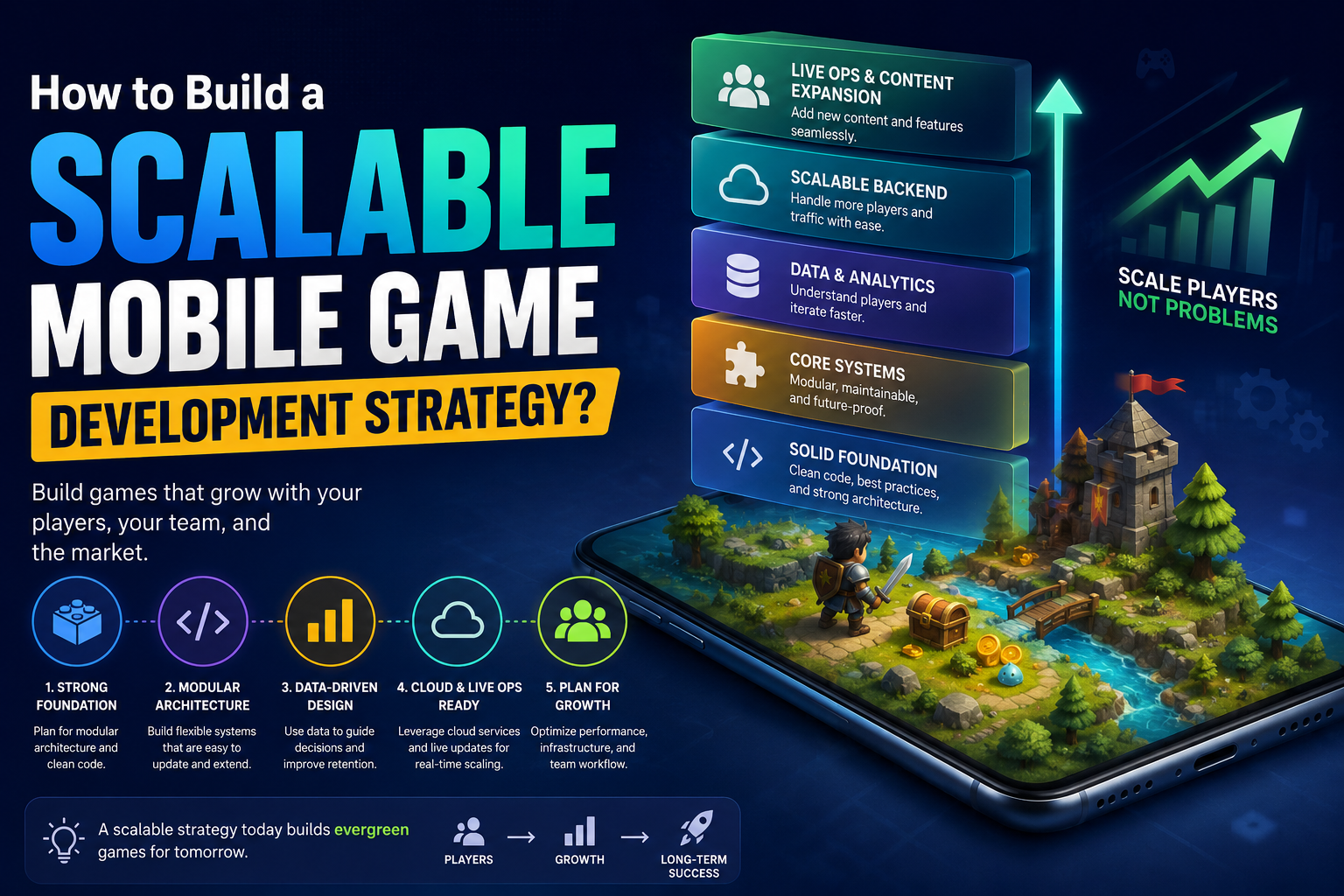
The gaming industry moves very quickly, and companies strive to attract millions of gamers through mobile devices. There is a constant need for high-quality gaming applications, from casual puzzle games to complex multiplayer projects. This makes the mobile game development strategy critical nowadays.
A well-made game is not just about creativity anymore. Today, scalability is among the key success drivers of any application. It allows handling increased traffic, regular updates, smooth performance, and other aspects of development and maintenance. Whether a start-up is developing its first gaming product or a large corporation entering the gaming industry, learning to build a scalable structure will benefit any company.
In our guide, we will walk you through the steps to create an efficient game development strategy.
Understand Your Target Audience
Identifying the target audience is one of the key elements in successfully developing a mobile game. Player demographics play an important role in game development, monetization, and infrastructure planning. Understanding the audience properly will help the developer develop an exciting game before further development.
- Target ages
- Gaming preferences
- Device usage habits
- Expectations regarding monetization
- Favorite game types
- Average session length
- Preference for multiplayer games
- Trends in the region
- Spending habits
- Game difficulty preferences
Start With a Scalable Game Architecture
Scalable game architecture enables mobile games to handle growing user numbers while maintaining optimal performance and stability. Startups often concentrate solely on rapid launch and disregard long-term technical solutions. Such an architecture will ensure smooth gameplay and improved server performance as user numbers and in-game activity increase.
A scalable architecture must include such aspects as:
- Traffic increase
- Synchronization in real-time
- Cloud service implementation
- Updating content rapidly
- Compatibility across platforms
- Improved management of back-end services
- Fast delivery of new features
- Data protection
- Stability in multiplayer games
- Minimized server downtime
The ability to scale cloud services allows developers to adapt server capacity to real-time demand. The application of microservices architecture is useful for scaling specific game operations, enhancing performance, minimizing downtime, and providing stability.
Choose the Right Game Engine
Selecting appropriate game engines can play a crucial role in scalability and performance optimization. Usually, developers select engines based on game complexity, graphical requirements, and platform compatibility.
Unity is another viable option for developing a mobile game because it lets you build both 2D and 3D games for Android and iOS. Moreover, a mobile game with Unity gives access to a vast developer community, plugins, and performance optimization features. Early selection of appropriate engines can help you avoid costly future migration problems.
Focus on Cross-Platform Development
Cross-platform development enables the gaming industry to offer a uniform experience to users across platforms through a single software application. Today’s gamers demand efficient performance across a range of devices, including smartphones, tablets, and more. It allows for easy scaling, faster delivery, and helps firms broaden their customer base while saving on costs.
Advantages of cross-platform gaming:
- Faster development cycle
- Lower maintenance cost
- Uniform experience for all users
- Efficient operation cost management
- Broader market reach
- Easier updates and debugging
- Effective scalability options
- Market expansion
- Efficiency of code reuse
- Faster time to market
Optimize Backend Infrastructure
The backend system is essential for providing a smooth game experience, particularly in multiplayer and real-time games. A lack of an effective backend can lead to latency, server crashes, and connectivity issues during peak traffic. An efficient backend is necessary to manage increased player activity and ensure the game runs smoothly.
Some features of a scalable backend system include:
- Cloud-based hosting
- Effective load balancers
- Real-time databases
- Security APIs
- Integration with CDN
- Low-latency infrastructure
- Automatic scaling of servers
- Effective data synchronization systems
- Backup and recovery plans
- Performance management tools
An efficient real-time multiplayer game requires an effective backend system. In cloud computing infrastructure, organizations can effectively scale their resources to match traffic demand, improving efficiency and reliability while avoiding future costs associated with mobile game development.
Implement Data Analytics Early
Analytics enable gaming companies to make better decisions through monitoring player engagement and behavior. Incorporating analytics from an early stage of the game development process helps to understand what works, improve the gaming experience, and optimize the monetization model. The use of data-based analytics also helps minimize risks, increase retention, and make mobile game development more affordable.
Analytics help to monitor:
- Retention rates
- Duration of playing sessions
- In-app purchases
- Gameplay interaction
- Feature usage
- Patterns of user interaction
- Financial performance
- Churn rates
- Participation in multiplayer games
- Conversion rates
A data-driven approach helps developers improve game mechanics, deliver personalized gaming experiences, and develop monetization models.
Build a Strong Monetization Strategy
A good monetization system will help gaming firms earn a steady income while ensuring players have a good time playing. Monetization planning at an early stage enables developers to integrate revenue strategies into the game’s gameplay easily.
Monetization techniques include:
- In-game purchases
- Ad rewards
- Subscription
- Premium gaming
- Battle pass
- Time-limited promotions
- Virtual currency
- Season pass
- Sponsored gaming events
- Unique character upgrades
The right monetization technique depends on players’ expectations and the game’s overall design. Overloading the game with too many ads might annoy players, but effective monetization strategies will boost profitability and enable future improvements and expansions.
Invest in Security and Data Protection
Security cannot be overlooked when it comes to the scalability of mobile games, as they handle players’ personal information, financial transactions, and online communication. Poor security systems can lead to data breaches, hacking, and financial losses. Implementing strong protection measures from the very beginning helps maintain customer loyalty and avoid future risks.
Some key elements that a scalable security system might involve are as follows:
- Encrypted transactions
- Authentication systems
- Anti-cheat software
- Vulnerability assessments
- GDPR and compliance
- Secure cloud environment
- Backup and recovery
- API security
- Threat monitoring
- Access control
Plan for Continuous Updates
The modern gaming community always seeks new updates and changes within their games. The scalable game should ensure that any updates do not affect performance or overall stability. An adaptable structure enables developers to easily release updates, test them quickly, and optimize the process.
Some updates could include:
- New levels
- Seasonal events
- Improved characters
- Improvement in gameplay mechanics
- Fixes for bugs
- New game modes
- Improved graphics
- Game balance adjustments
- Reward systems during certain times
- Extended storylines
Agile development is helpful because it allows developers to release updates quickly while maintaining the game’s stability. The continuous development ensures increased customer satisfaction, improves engagement, and helps the game
Test Scalability Before Launch
Games often start acting up once actual players come online, particularly after the initial launch when traffic spikes. Testing games for scalability before release is necessary because it can help identify potential weak links before they emerge. Testing for scalability involves creating scenarios that stress the game under high demand while monitoring its ability to withstand that pressure without crashing or slowing down.
Important forms of testing include:
- Load testing
- Stress testing
- Benchmarking performance
- Multiplayer synchronization testing
- Device compatibility testing
- Latency network testing
- Server endurance testing
- Simulating peak traffic
- Memory utilization monitoring
- Frame rate performance checking
Pre-launch scalability testing reduces downtime, increases user satisfaction, and enables proper planning of required infrastructure. Additionally, it provides insights into the costs of future mobile game development.
Final Thoughts
Developing an efficient mobile game involves careful consideration of numerous elements, including architecture, backend, performance, and updates. Considering scalability from the very beginning enables games to handle growth, deliver reliable performance, and maintain players’ interest over the long term. Moreover, it reduces the risk of future technical problems and eliminates the need to redevelop the product. Generally, success in the gaming industry comes from balancing creativity with strong technology, and hiring a mobile game development company helps the product grow over time.